
we value your feedback


Title
First Name*
Last Name
Company
Phone* +
(*please include your area/country dialing code)
Email
Country
Your Enquiry

Quick Survey
  1. Would you like a CityGreen Consultant to contact you?
  2. (required)
  3. How would you rate the CityGreen website for ease of use?
 

CityGreen Continues to Impress Dandenong

CityGreen continues to impress Dandenong_1

CityGreen continues to impress Dandenong
By: Kristyn Maslog-Levis

The CityGreen® modular StrataCell system® continues to impress contractors for the City of Dandenong shared space project at the City Street and North Station Plaza.

Dandenong is located in the heart of Melbourne’s growing southeast corridor, which was the focus of the state government’s $290 million funded project.

The initiative “Revitalising Central Dandenong” aims to rejuvenate the city centre and is being delivered by the Victorian government through Places Victoria, in partnership with the City of Greater Dandenong.

CityGreen continues to impress Dandenong_2

Over 250 trees were planted as part of the revitalisation of Dandenong, which started in August 2010. The StrataCell system replaced previous systems used that were too expensive.

ASPECT Studios was the lead consultant, Urban Designer and Landscape Architect for the City Street and Station North Plaza project. The company handled everything from the concept design to construction documentation.

The project’s primary objective was to provide the main pedestrian link between the revitalised central Dandenong and the Dandenong Railway Station.

“This connection takes on various forms of urban plaza and ‘shared street’ with extensive greening through trees and rain gardens. It serves as a major food, retail, residential and commercial destination for this part of Dandenong,” says Blake Farmar-Bowers from ASPECT.

The ‘Shared Vision’ for Dandenong includes easy and safer pedestrian connections around the city, improved traffic situation and public transport, attractive public spaces for people to relax, high standards of environmental sustainability, more life on the streets and more green across the city centre.

Blake said there was very minimal available growing space for street trees as the area was a very urban and paved environment along with extensive underground services. One of the biggest issues they found was designing the tree surrounds so that it withstands fire truck loading.

StrataCells were used to increase the depth of the viable growing soil media, creating best conditions for these trees to flourish given these constraints,” he added.

Blake recalls that the “irregular shaped garden beds created complexity with extent of StrataCell lay pattern”. But with the assistance of CityGreen and Civilscape, the contractor for the project, the installation went very well.

Since then, ASPECT has pursued the use of CityGreen systems in several of its other projects.

“A complete system comprising arbor system, grates and guards has been useful in the specification of further CityGreen products,” Blake says. So far, Blake confirms the trees are looking good with no issues that he’s aware of.

Hayes Heffer, the head contractor from civil construction company Civilscape, agrees with ASPECT’s view on the CityGreen system. For him, the biggest issue of the project was the compaction of the soil, which was resolved with the use of the StrataCells. He says he found the system very easy to install and that they will definitely be using it in future projects.

The City Street and North Station Plaza project was the first time that ASPECT and Civilscape used the StrataCells, but they were aware of the system being used on the Lonsdale and Langhorne street project, which was a major streetscape development costing around $30 million.

CityGreen continues to impress Dandenong_3

The Lonsdale Street has been turned into one of Melbourne’s great boulevards with a green and pedestrian-friendly main street encompassing the city’s vibrant retail industry.

By using StrataCells, they were able to reduce the cost, which allowed them to achieve all the benefits that were needed to finish the project. Like ASPECT, the consultants of the Lonsdale and Langhorne Street project never used the CityGreen system before. But after seeing the results of the projects in Auckland, New Zealand, they were inspired to use the same system for the Dandenong project.

After the Lonsdale project, the landscape contractor recommended the use of the CityGreen system on several of their projects, due to their “high support strength, ease of installation, and ability to thread services up to 100mm diameter through the cells and maintain proper soil density”. Its modular interlocking design also enables a flexible approach to design.

The StrataCells structural soil cells can be assembled to form a skeletal matrix that supports pavement and traffic loads. This structural cell system features almost five times more available growing media compared to the traditional rock/soil method, therefore facilitating healthy root growth. Because of its high structural integrity, these matrices can be used beneath trafficked areas.

CityGreen continues to impress Dandenong_4

CityGreen is very proud of its role in the successful installation of urban spaces especially after a study from the University of Exeter in the UK showed that people living in urban areas with greater green space are happier compared to those living in areas with less green space.

The study showed that the residents have significant lower mental distress and higher wellbeing and life satisfaction. Aside from providing quality products and services to urban planners, CityGreen also pays constant attention to the benefits of expanding green spaces in urban areas as well as ensuring that their products are environmentally sustainable.

The StrataCell modules are recyclable and are manufactured from 100 per cent recycled polymer. As there are no steel components, the modules are corrosion free.

Urban Forestry and Transportation

Urban Forestry and Transportation_1

Urban Forestry and Transportation
By: Richard J. Magill, Magill & Associates, Inc.

This is the second in a series of six articles that will explore the various interactions and outcomes that result from human contact with our urban forests. This article will investigate the positive and negative impacts of our city forests on urban transportation systems.

“Urban forests (when properly designed and managed) can contribute to the enhanced safety, improved aesthetics and superior environmental conditions of our city transportation systems and our communities at large.” While this statement may seem contrary to commonly accepted transportation system planning and implementation guidelines, please consider the following.

Safety Issues

  • Speed Reduction- It has been proven over many years of observation that tree-lined roadways provide “spatial definition” that makes the road appear to be narrower; therefore encouraging slower driving speeds.
  • Stress Reduction- the psychological effect of trees along roads tends to reduce the occurrence of road rage and also improves the attention span of drivers.
  • Physical Buffers- Vegetation can provide an effective barrier between opposing vehicular traffic, and between adjacent public spaces and pedestrian ways.
  • Unwanted Obstacles- traditional road planning and design guidelines identify “clear zones” where no large objects should be allowed. Trees and other vegetation planted in these “zones” are thought of as hazards to visibility and vehicular safety. While there are certainly situations where this is absolutely true, often these guidelines are too strictly defined and applied. There are many instances where proper landscape design and plant selection would allow for trees or shrubs in or adjacent to these areas without compromising safety.

There have been a number of studies (Dumbaugh 2005, Naderi 2003 and Mok et al. 2006) that seem to indicate a decrease in crash rates on landscaped urban arterial roads and highways, versus roadways that did not have landscaped areas adjacent to them.

Aesthetic Issues

Urban Forestry and Transportation_2

  • Drivers believe that forested urban highways have higher visual quality and consequently, they have more favorable perceptions of communities that contain and promote green roadsides. This subjective perception leads to a better image of these communities and results in positive socio-economic benefits beyond purely aesthetic considerations.
  • As alluded to in the section above, attractive trees and other vegetation planted adjacent to vehicular and pedestrian ways fosters a general sense of wellbeing and is conducive to more-positive human interaction in transportation corridors.

Environmental Issues
The Good

  • Landscaped areas adjacent to roadways are critical to effective stormwater management, including snow storage and melting areas in colder climates. Vegetation in these areas serves to prevent unwanted erosion and helps to absorb the water that runs off of impervious roadways and associated infrastructure. Trees play a particularly important role in erosion control and absorption of surface runoff.
  • Properly landscaped roadways serve to filter man-made pollutants after water runs off the roads. Filtering stormwater runoff helps to keep our rivers, lakes and aquifers cleaner for human use and consumption, and ultimately protects the health of our oceans.
  • The shade provided by trees and other vegetation can significantly prolong the usable lifespan of roadway surfaces (particularly asphalt) by protecting them from harmful ultraviolet rays.

The “Not So Good”

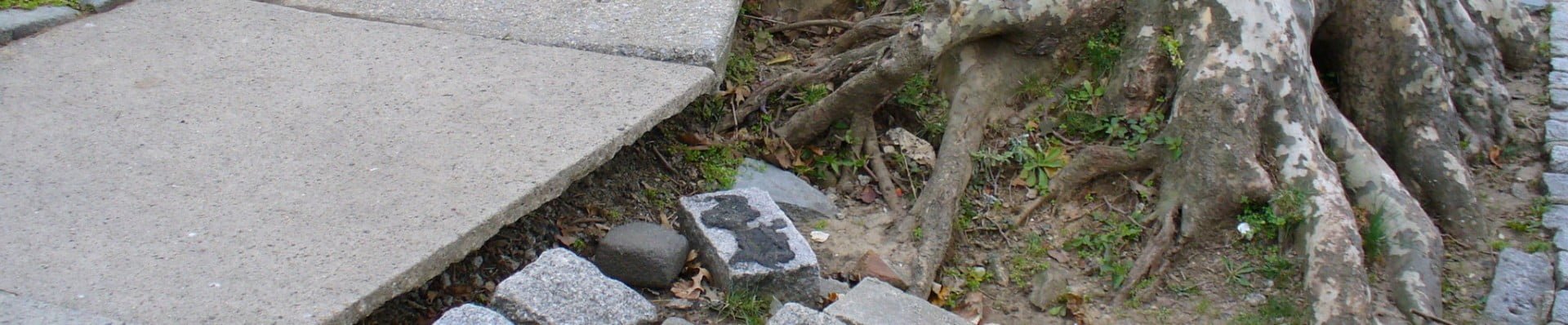
  • Invasive tree roots can be a problem, particularly for surface streets and sidewalks where landscaping is directly adjacent to the roadway. Solutions like the Structural Soil Cells designed and manufactured by Citygreen serve to minimize damages caused by tree root systems by providing a defined area for healthy root growth while providing exceptional structural stability for heavy-traffic areas above. Structural soil cells also improve surface drainage and play an important part in efficient stormwater management systems.

Urban Forestry and Transportation_3

  • The leaves and branches from deciduous trees and shrubs can be an issue with the stormwater drainage systems of our roadways, particularly in the fall season. Regular maintenance, well-designed drainage infrastructure, and appropriate plant selection can dramatically minimize this hazard however.
  • Trees and shrubs adjacent to roadways, bikeways, and railroad lines can hinder visibility of other vehicles, particularly at intersections. This problem can be mitigated by good landscape planning and design, attentive pruning practices, and the timely replacement of plants that outgrow their immediate surroundings.

By utilizing a balanced response to the functional needs of transportation systems and the overall health and welfare of urban dwellers, a thoughtfully planned and managed urban forest can be the catalyst that unifies these two seemingly disparate ideals, and going forward, play a crucial role in the world’s evolving urban environment.

Next article: “The Urban Forest and Local Economies”

Soil Cells for healthy trees in New York City

StrataCells in the City_1

Soil Cells for healthy trees in New York City
By: Kristyn Maslog-Levis

The CityGreen® modular StrataCell system® has taken on Manhattan, New York with smashing success.

The One Pace Plaza project for Pace University required the total removal and replacement of all planting, paving, seating, lighting, decorative fountain, and related site appurtenances. The revitalised courtyard is now more functional and welcoming, and new trees are located within the paving system where the StrataCell system was installed.

AECOM designed the complete renovation of the Pace University courtyard, which started in June 2012 and was completed in October 2012, with a total budget of US$900,000.

One Pace Plaza is the flagship building complex of Pace University. Located directly across from City Hall and adjacent to the Brooklyn Bridge, the building was designed specifically for the university and completed in 1969. It houses most of the university’s classrooms, administrative offices, student union, community theatre and an 18 floor high rise known as Maria’s Tower.

“The client wanted to create a central gathering space that was flexible in programming with seasonal interest and a more contemporary design in keeping with year round school programming, and also matching raised standards in other campus’ and lower Manhattan neighborhood renovations that are lifting the overall aesthetic character of the neighbourhood,” says Adrianne Weremchuk, ASLA, ISA, GRP, Landscape Designer, Green Roof Professional & Certified Arborist from AECOM.

StrataCells in the City_2

Anthony Scorcia, president of the project’s general contractor Scorcia & Associates Inc, says the CityGreen StrataCell system replaced a previously specified competing product.

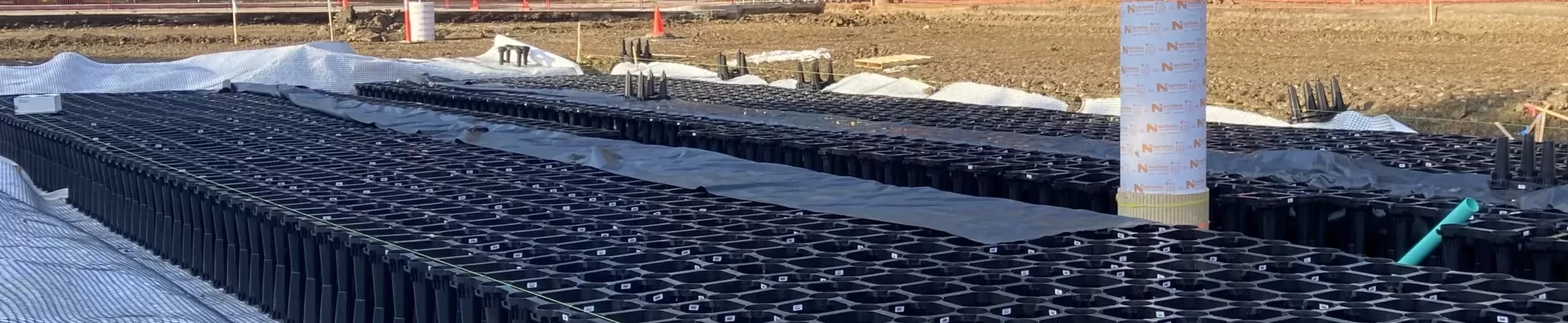
Two tiers of StrataCells were used together with the RootStop® barriers. The StrataCells structural soil cells, manufactured from 100 per cent recycled polymer, can be assembled to form a skeletal matrix that supports pavement and traffic loads. This features almost five times more available growing media compared to the traditional rock/soil method, therefore facilitating healthy root growth. Because of its high structural integrity, these matrices can be used beneath trafficked areas.

The RootStop root management barriers are continuous, non ribbed root barriers designed for the larger application of protecting infrastructure and services. Because of its market leading puncture resistance and strength, the RootStop has become the root barrier of choice for specifiers and utility companies requiring root free service corridors. Aside from being easy to install, its flexible design also allows the barrier to curve around obstacles. Like the StrataCells, it is environmentally friendly as it’s made of 100 per cent recycled polymer.

Although this is the first time that Scorcia & Associates Inc used the CityGreen system, they were very impressed with the ease of installing the product and found that it all went together very easily.

StrataCells in the City_3  StrataCells in the City_4

“The CityGreen system was easier to install than I thought it would be once the area was prepped,” Anthony says. Adrianne from AECOM also said the system provided a solution to the design intent to completely pave the courtyard while providing trees throughout.

“It enabled us to provide for three pairs of trees to be installed within the paving system. The StrataCell is intended to sustain the trees with a larger soil bed that would allow for more extensive root establishment, while structurally supporting the paver system above,” Adrianne said.

AECOM found that the StrataCell’s modular octagonal design allows for a more flexible layout. “We found this system to be a more cost-effective option for our client than others that we reviewed,” she added.

The issues the project faced were more related towards the delay of the product’s arrival from customs in the Canadian border rather than the product itself. Both AECOM and Scorcia & Associaties Inc had no difficulty installing the system even when they were forced to work out of sequence.

By the time the StrataCell was delivered to the site, the paving system, including its drainage subbase was already installed. The contractor was very careful to shore up the surrounding paving/subbase installations while installing the system, and then backfilling in and around the cells to complete the installation.

The original design had called for surface drains but was changed to a permeable system that allowed water to drain through to a subsurface drainage system that required the installation of 18 inch gravel. They filled the entire site with the drainage gravel then excavated the areas to receive the StrataCells.

StrataCells in the City_5

Anthony said the system fits very well with the overall design and has had no issues since the project was completed. Because of his experience, he says he will use it again if future projects specifies for such a system. AECOM agrees with Anthony’s experience and adds that the client is very happy and satisfied with the courtyard.

“As of today, the University has not experienced any issues with the installation, including no settling of pavement or drainage issues, and the trees are doing well,” Adrianne says.

With their experience using the StrataCell system in One Pace Place, Adrianne says AECOM will certainly consider CityGreen systems in future projects.

StrataCell System Saves the Arena

StrataCells being installed in Central Dandenong, Melbourne

StrataCell System Saves the Arena
By Kristyn Maslog-Levis

The CityGreen® Modular StrataCell System® was the system of choice at the recently completed Perth Arena in Western Australia.

The Perth Arena is a15,000 seat multi-purpose entertainment and sporting arena in the Perth CBD. The venue opened in November 2012 and is located adjacent to the first stage of the Perth City Link, a 13.5 hectare major urban renewal and redevelopment project.

Urbis was responsible for the design and contract administration of all landscaping and the forecourt area of the Arena.

Belinda Foster of Urbis said the Perth Arena landscape concept is “quintessentially a West Australian landscape within a contemporary, flexible urban space”. The venue caters for both major events and everyday use.

The flexible design allows for future adjacent development and activity and will provide an important link to Northbridge.

Perth Arena Install 02 2012 (2) sm

The Arena’s western plaza consists of the permanent park and a full size tennis court area used during the Perth’s annual Hopman Cup Tennis event. During the Hopman Cup, the outdoor tennis court will be the major feature of the plaza and at other times of the year, the court will be covered, creating a passive recreation area.

The Perth Arena’s planting theme is West Australian. This is exhibited through the use of Eucalyptus with clear, smooth stemmed branches, light foliage and free form character, and in the selection of colourful and distinctive shrub planting species.

Grass with Eucalyptus drummondi is a dominant feature of the Western Plaza, providing a soft surface for quiet recreation when the arena is not in full use.

Urbis elected to use the CityGreen StrataCell system as it was readily available, which was critical given the tight time constraints on the project delivery. “It was the best option to assist in achieving the desired planting outcomes in a trafficable environment.

StrataCells are structural soil cells that come in modular units and are assembled to form a skeletal matrix that supports pavement and traffic loads. This structural cell system features almost five times more available growing media compared to the traditional rock and soil method, therefore facilitating healthy root growth.

Because of its advanced engineering design, the interconnected skeletal matrix provides over 94 per cent void space for filling with soil media, or storing/detaining storm water. Due to the high structural integrity of the modules, these matrices can even be used beneath trafficked areas, making it the perfect solution for the Arena project.

Belinda added that the landscape concept included a majestic grove of white-stemmed West Australian trees, the Eucalyptus vitrix, on the Arena’s eastern plaza.

The planting will be robust, durable and hardy requiring minimal but focused and skilled maintenance,” she said.

Perth Arena Install 02 2012 (4)  Perth Arena Install 02 2012 (6)

The use of tall clean stemmed trees will soften the space providing shade during the summer with the light canopies allowing winter light to warm the plaza and create a contemporary forest in the city. The spacing and height of the trees allows for major events to take place without any compromise in space, sight lines or flow through the site.

This is the first time that Urbis used the CityGreen StrataCell system and it did not disappoint.

Belinda mentioned some of the obstacles they faced, including that the tree locations were a 900mm deep pit with concrete surround. “The specified trees were natives and sensitive to waterlogging. The design objective was to achieve a mature treed landscape, but with constrained growing medium, this may not have occurred.

By using the CityGreen StrataCell system, these issues were quickly resolved.

The CityGreen StrataCell system was the perfect solution, enabling increased soil volume, trafficability and assisting to maintain soil friability during construction. Together, these elements of this urban landscape space create a flexible contemporary urban space that accommodates the requirements of the Arena facility as well as providing an exciting new civic space for the people of Perth,” she said.

Belinda says the system fits well with the overall design of the arena and that they will definitely be using the CityGreen system in the future.

IMG_4537 Perth Arena  IMG_4564 Forrest Pl

CityGreen Systems are also advocates of environmentally friendly solutions. Aside from having a very high strength capacity, the StrataCell modules are also recyclable and are manufactured from 100 per cent recycled polymer. As there are no steel components, the modules are corrosion free.

The Human Dimensions of Urban Forestry

Quality Soils_3

The Human Dimensions of Urban Forestry
By: Richard J. Magill, Magill & Associates, Inc.

Introduction
This is the first in a series of six articles that will explore the various interactions and outcomes that result from human contact with our life-sustaining urban forests. These articles will explore the impacts of the urban forest on transportation, local economies, social interaction, health and safety, and urban planning and policy.

In order to better understand the impacts that our urban forests have on the human condition and conversely the effects that humans have on the forest, an introductory discussion about urban forests and urban forestry follows.

10144436_m

The Urban Forest
The Plants: Generally, urban forests are found in or adjacent to populated areas and are comprised of collective masses of trees, woody shrubs, annual and perennial flowers, and various types of grasses. Trees largely play the leading role in the urban forest ecosystem but certainly the other plant species play important supporting roles. Urban forests occur on both public and private lands and vary greatly in appearance. Some may be “remnant forests”: small groups of trees preserved during development that become important open space and greenbelts. Other sites are designed landscapes made up of a thoughtful composition of trees and other plants, typically found in urban parks, transitional areas (edges between different uses) and residential landscapes. Some forests thrive on undeveloped land and may be an unintended collection of plant volunteers and weedy vegetation. Even though each of the forests described above differ aesthetically and ecologically, it is widely known that trees and plants in all forms and settings provide critically important environmental benefits such as:

  • Sustainable Carbon Dioxide Exchange
  • Reduced Energy Use
  • Air Pollution Reduction
  • Storm Water Management
  • Water Quality Improvements

The People: The challenges that face our urban forest and its human inhabitants are vast and complex. The constraints of the forest include: limited space, soil quality, air quality, and the availability of adequate water and nutrients. These constraints significantly hinder healthy tree growth and therefore comprise the quality of life of the humans that live in urban areas.

There are many positive effects of a healthy urban forest on people, not the least of which are the psycho-social benefits. It is widely known that human interaction with nature:

  • Helps to Reduce Stress and Anxiety
  • Improves Medical Recovery and Convalescence
  • Contributes to Greater Job Satisfaction and Productivity
  • Promotes Healthy Social Interactions
  • Enhances Overall Quality of Life

15581287_m

Urban Forestry
The continued health of the urban forest is largely dependent upon the contributions of urban foresters, elected officials and policy-makers, urban designers and planners, and citizen volunteers- including residential homeowners. Obviously, the people listed above are also beneficiaries of a healthy urban forest. Perhaps this is why the movement to promote and preserve our urban forest resources has gained so much momentum in recent years.


  • Urban Foresters: An exciting trend in recent years is the presence of urban foresters on the staff of city governments and local agencies. These trained professionals offer critical technical knowledge of plants and their benefit to the inhabitants of urban landscapes. Even smaller municipalities are realizing the advantages of having a qualified forester to advise them on policy and procedures. Urban foresters provide important advice to local elected officials and policy-makers so that they can make informed decisions.
  • Elected Officials and Policy-Makers: The responsibility to turn the latest technical information and the tide of public opinion into effective policy and working regulations is largely in the hands of this group. An increased awareness of the importance of a healthy forest in all types of human interactions in the urban environment needs to be supported and advanced by these trusted public servants, both in policy and action-based regulations.
  • Urban Planners: Most urban planners are well versed in the importance of a healthy urban forest on the human condition. In the modern world today, planners promote the establishment and/or conservation of public and private open space, greenbelts and conservation areas, both in public community master plans and through the review of private development proposals. These trained professionals utilize the technical knowledge provided by urban foresters, sociologists, landscape architects, biologists, soil scientists, engineers and other experts to provide a framework for sustainable growth and development.
  • Citizens: An abundance of citizen volunteers provides a sizable workforce for planting and maintaining trees and other plants in cities and towns around the world. Without these volunteers, the cost of healthy urban forests would often be prohibitive, especially for smaller municipalities. Residential homeowners are responsible for a large portion of the urban forest and every consideration should be offered to these “volunteer foresters”, including but not limited to advantages of availability and affordability of quality plants and planting supplies at local nurseries, and favorable landscaping regulations in local governments and homeowners associations. Through the continued diligence of the volunteers who plant, maintain and support the cause of trees and other plants will further promote the health of the urban forest and insure the aesthetic and functional qualities of this important ecosystem for future generations.
  • Green Industry: Last but by no means least, socially and environmentally responsible companies that produce innovative products to advance the quality and efficiency of the urban infrastructure are critical the future health of our city forests. Companies such as Citygreen produce thoughtfully designed and manufactured landscape systems, above and below ground, that provide effective solutions to the complex demands of the urban environment.

Join us for the next article in this series The Urban Forest and Transportation.

Main Street Rossland: A Landscape Upgrade with a Difference

StrataCell linked pit will provide an optimum zone for tree roots and water harvesting

Main Street Rossland:
A Landscape Upgrade with a Difference
By Nadia Geagea Pupa

Rossland is one of Canada’s highest cities is in the West Kootenay region of British Columbia, located high in the Monashee Mountains, with an elevation of 1023 meters. Historically, the city of Rossland was once one of Western Canada’s largest cities during the time of the gold rush in 1897, and some of the historic buildings from that era have still survived. However, Rossland’s unique alpine environment is mostly known for its extensive biking trails and was awarded “Mountain Bike Capital of Canada” in 1993.

Recently, efforts have been made in Rossland to protect its green infrastructure and natural ecosystems in order to allow healthy trees to thrive. The renovation project included a full revitalization of the area as a way to improve the city’s streetscapes. The CityGreen system was chosen primarily by landscape architects for its low impact design qualities, by engineers for its excellence in strength, and by contractors for the ease of its installation process.

DSCN0758_600

The Rossland project included the removal and replacement of existing services, road works, electrical, landscaping, and site furniture,” said Allen Tower, Vice President of Sierra Landscaping, Ltd. and director of the Rossland project.

The existing trees were about 10 to 15 years old and they hadn’t grown due to the trees being installed in pits that were just a two meter square,” said Jeff Schurek, CSLA, Landscape Manager / Senior Landscape Architect of ISL Engineering and Land Services Ltd. “The trees were doing extremely poorly. This is not an acceptable way to grow trees. We reviewed a number of different products and decided to work with CityGreen.

During the early stages of the planning process, the StrataCell system was specified for this project primarily due to its high engineering qualities and its capacity to provide high structural soil volume to assist the development of healthy growing trees.

The StrataCell was incorporated beneath the hardscaping for the length of the project,” said Tower. “They were installed 1000 mm deep, 1500 mm wide, and included StrataCell, geo textile, subgrade base gravels, and topsoil. Water harvesting for irrigation and electrical was also included within the StataCell matrix.

The installation of the StrataCell took about five weeks, which included subgrade, base installation, topsoil delivery and placement, and geogrid installation.

CityGreen was there throughout the various stages of the process in terms of technical review,” said Schurek. “They were out onsite solving real issues to work with the contractor to come up with better solutions in the best way possible.

The design for this project also required a drip-line irrigation system that was installed throughout the many linked tree pit systems, but due to the tree pits being enclosed, the ArborVent system was installed, which helps to provide oxygen as a permanent irrigation/aeration solution and to prevent soil stagnation. The tree root systems, being set in the StrataCells, allows for the tree roots to grow in the adequate and sufficient root volume which is necessary for healthy growth. This project also used the StrataCell system to provide for a storm water tree trench down the length of the street which bridged areas where there were existing utility lines.

Actually, most utility lines were outside the area that the system was installed,” said Tower. “For a couple of places, we had to remove the bottom layer and replace with crush to cover water lines that moved through the system. Installation of electrical and irrigation were run through the StrataCell. It was straight forward and easily accommodated, and overall, it was a simple process.

We captured storm water and to be used in a gravity-fed irrigation system” said Schurek. “The system filters the water in a tank that is high enough on the hill, that it doesn’t require any additional pumping.

Gen V StrataCell_600

In total, the extent of the system was approximately 570 cubic meters with 52 different types of trees being planted, which ranged from maple, princeton elms, and Japanese zelkova. The trees were chosen for winter hardiness and lack of disease and insect issues.

CityGreen came out twice during the installation project,” said Schurek. “Within 1.5 weeks, the StrataCell systems were installed on one side of the street (approximately four blocks). That was extremely fast. The contractor was so pleased at the rate. He had worked without this product in the past, but the process took much longer.

Altogether, the Rossland project comprised of a major landscape upgrade that truly made a difference to the area. By using the StrataCell system, it ensured the sustainable growth and development of the different types of trees that were planted for this important upgrade.

Another selling point of using the StrataCell system is that the price is reasonable,” said Schurek. “We were sold on using this product on the basis that it provides trees the room to grow. This is the most important thing for developing a healthy streetscape—healthy trees for the future.

The Rossland community, natural environment, and the city’s heritage equally contribute to Rossland’s unique charm as it continues to attract more and more potential residents and visitors.